
Will a Corner Lazy Susan Fit Your Kitchen Cabinet? Measuring Radius, Pivot Clearance, and Door Openings
Will a Corner Lazy Susan Fit Your Kitchen Cabinet? Measuring Radius, Pivot Clearance, and Door Openings
If you have ever lost a jar of oregano or a box of pasta to the dark, unreachable abyss of a kitchen corner cabinet, you know the absolute frustration of dead space. A corner lazy susan is the ultimate kitchen upgrade, transforming wasted angles into smooth-spinning organizational powerhouses. But before you open your wallet and click buy on a flashy new kitchen organizer, you need to answer one critical question: *will it actually fit?*
Many homeowners make the mistake of measuring only the width of the cabinet door, only to discover that the shelf hits the back wall, jams against the hinge, or refuses to let the door close. Achieving a seamless installation requires understanding your **corner lazy susan cabinet measurement** requirements inside and out. In this comprehensive guide, we will walk you through everything from radius and pivot clearance to door openings and interior dimensions, ensuring your hardware upgrade goes off without a hitch.
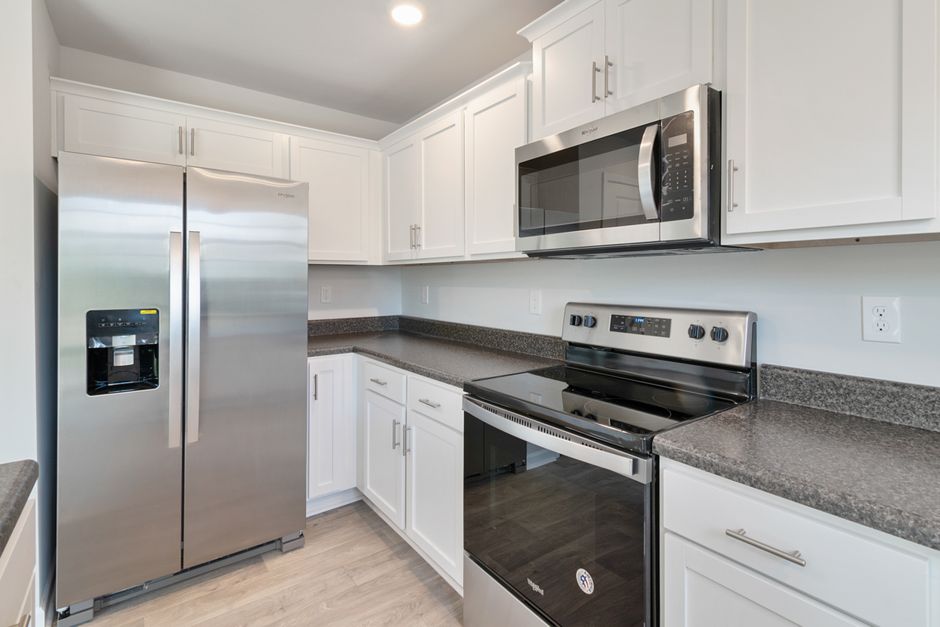
Anatomy of a Kitchen Corner Cabinet
Before breaking out the tape measure, it helps to understand what kind of cabinet you are dealing with. Kitchen corners are notoriously tricky because two cabinet runs meet at a 90-degree angle. Depending on how your kitchen was built, you likely have one of two main configurations:
- Standard Diagonal Corner Cabinet (Pie-Cut): These feature a single door positioned at a 45-degree angle across the corner. They are generally the easiest to fit with a standard round lazy susan turntable size calculator approach because the opening is wide and symmetrical.
- Blind Corner Cabinet: These feature a door on one side while the other side extends blindly into the adjacent run of cabinets. These require specialized hardware like half-moon swings, kidney-shaped shelves, or pull-out systems rather than a simple spinning circular tray.
Regardless of your cabinet style, failing to check cabinet depth for a lazy susan or miscalculating clearance can lead to returned parts, wasted time, and a messy kitchen layout.
To evaluate your cabinet structure effectively, look closely at how the frame is constructed. Framed cabinets (traditional American style) feature a wooden face frame attached to the front box, which can reduce the clear opening width compared to frameless (Euro-style) cabinets. When planning your retrofit, note whether your shelves will mount to a central telescoping pole, floor brackets, or side walls. Each mounting style interacts differently with the structural walls and internal studs of your cabinetry.
Step One: Measuring Interior Width, Depth, and Height
The foundation of any successful storage upgrade begins with knowing your exact interior space. Grab a reliable steel tape measure and clear out all your pots, pans, and dried goods so you can get a true read on the structure.
Measuring the Cabinet Width and Depth
When figuring out how to measure a corner cabinet for a lazy susan, you must measure the interior clear space from wall to wall. Standard base cabinets are typically 24 inches deep from the front frame to the back wall, but corners can vary wildly depending on whether they are custom-built or modular. Measure the distance from the left interior wall to the right interior wall at the widest point, and then measure from the front frame to the back interior corner.
Let us look at a practical calculation example. If your interior side walls measure 36 inches on each leg of an L-shaped corner base, you might assume a 32-inch lazy susan will easily drop inside. However, you must account for interior corner gussets, thickness of side panels, and utility lines. If the diagonal distance from the front corner post to the rear interior angle measures 34 inches, a 32-inch tray (which has a 16-inch radius from center) will theoretically fit, provided nothing obstructs its 32-inch sweep path.
Checking Cabinet Height and Obstructions
Vertical space matters just as much as horizontal space. Measure the vertical clearance from the floor of the cabinet to the underside of the upper shelf or countertop frame. Take note of any plumbing lines, gas pipes, or electrical wires running through the back or bottom of the cabinet. A spinning shelf needs absolute freedom of movement; even a half-inch pipe can completely halt a rotation cycle.
When recording height, calculate the vertical spacing required for your specific items. If you intend to store tall blenders, cereal boxes, or large stockpots on the bottom tier, ensure the intermediate shelf can be adjusted upward without compromising the clearance needed for the top tier to rotate underneath the upper cabinet framework or drawer box slides.

Radius and Pivot Clearance: The Math Behind the Spin
The biggest reason homeowners struggle with fitting a pull-out lazy susan in a small kitchen is ignoring the physics of rotation. A round shelf does not just sit in the center of a box—it sweeps across a wide circular arc. If your shelf radius is too large, the edges will scrape against the cabinet walls, or worse, jam completely.
Calculating the Radius
The radius is half the diameter of your circular tray. For instance, a popular size for standard corner cabinets is a 28-inch diameter shelf, which gives you a 14-inch radius. To check if this will fit, measure from the center pivot point (where the central pole will mount) to the back corner of your cabinet. The distance from the center post to the back corner must be greater than or equal to the shelf radius plus a small safety margin.
Apply this mathematical formula to verify your spatial geometry:
Minimum Required Wall Clearance = Shelf Radius + 1/2 Inch Safety Buffer
If you are installing a 32-inch diameter lazy susan, your radius is 16 inches. Therefore, the distance from your chosen center mounting point to each adjacent interior wall must be at least 16.5 inches to prevent scraping. If your cabinet walls measure 30 inches total in width, placing a center post dead-center might leave only 15 inches of clearance to the side walls—meaning a 32-inch tray will collide with the sides. In this scenario, you must downsize to a 28-inch tray (14-inch radius) to achieve proper clearance.
Understanding Pivot Clearance
The pivot clearance refers to the space required for the rotating mechanism and the items on the shelf to clear the door frame as they spin. If your lazy susan cabinet radius and pivot clearance numbers do not align with your interior dimensions, your shelves will lock up the moment you try to turn them while items are loaded on top.
Furthermore, consider weight distribution mechanics. When items are stacked unevenly on a rotating tray, centrifugal force and eccentric weight loads can cause the central pole to flex slightly. If your pivot clearance is already razor-thin (less than a quarter-inch), a heavy load of canned goods will cause the spinning shelf to sag and rub against the cabinet floor or lower shelf brackets.
Evaluating Door Openings and Swing Clearance
You can have the best-fitting interior mechanism in the world, but if your cabinet door cannot open wide enough, you will never be able to pull out or spin your organizer effectively. This is where many DIY kitchen projects fall short.
Measuring the Clear Door Opening
Measure the actual usable opening when the cabinet door is swung fully open. If you have frame-mounted hinges that protrude into the opening, measure between the innermost edges of those hinges, not just the outer frame. A lazy susan shelf rotation clearance measurement must take into account whether the spinning edge of the tray can pass through the doorway without catching on the door frame or protruding hardware.
When dealing with diagonal pie-cut doors attached via piano hinges or specialized lazy susan hinges, the door panel itself often folds inward or swings clear. However, if you have standard adjacent doors meeting at a corner post, the door opening width is restricted by the door frame stile. Always cross-reference your tray diameter with the diagonal clear opening of the doorway.
Hinge Style Matters
Standard 90-degree hinges may restrict your door from opening wide enough. For optimal corner cabinet organizer clearance, consider upgrading to 110-degree, 125-degree, or 170-degree wide-swing European hinges. These allow the door to pull completely out of the way, giving you unobstructed access to your rotating shelves.
When replacing hinges for a corner cabinet installation, verify the overlay type (full overlay, half overlay, or inset) to ensure your door does not bind against the adjacent cabinet box when swung open to its maximum angle.
Measuring Face Frames for Blind Corner Inserts
If you are asking yourself *will a lazy susan fit in my corner cabinet* when dealing with a blind corner setup, standard circular trays usually will not work. Instead, you need a blind corner optimizer, a half-moon swing tray, or a multi-tier swing-out pull-out system.
When measuring a face frame for a lazy susan insert in a blind corner, follow these exact steps:
- Measure the exact width of the rough door opening from the inside edge of the vertical stile to the opposite side of the frame.
- Measure the blind cavity depth: the dark, hidden space extending past the door opening behind the adjacent cabinet run. Note where electrical outlets, water supply lines, or ductwork cross this hidden zone.
- Check the vertical clearance above and below the opening to ensure sliding or pivoting mounting frames can slide out smoothly without hitting drawer slides, countertop overhangs, or toe-kick platforms.
- Measure the interior clearance of the adjacent cabinet box where the pull-out hardware will travel during its articulation cycle.

Common Measuring Mistakes to Avoid
Even seasoned handymen occasionally make errors when sizing up kitchen storage. Keep these common pitfalls in mind before purchasing your hardware:
- Ignoring Countertop Overhangs: Always measure your top opening relative to the countertop overhang. Sometimes the countertop extends further inward than the base cabinet frame, restricting vertical clearance at the top of the swing or blocking top-tier shelf removal.
- Forgetting Shelf Lip Height: Make sure the vertical rim or gallery edge of the lazy susan tray won't clip the bottom of the countertop framework or upper door frame when the shelf is rotated. A shelf with a 2-inch high wooden rim requires more vertical clearance than a flat wire tray.
- Measuring Outer Dimensions Instead of Interior: Exterior cabinet measurements include the thickness of the plywood or solid wood panels (usually 1/2 inch to 3/4 inch per wall). Always measure the inside usable space to prevent ordering hardware that is too large.
- Overloading Weight Capacities: While not strictly a measuring issue, ensure your cabinet walls, floor, and corner gussets can support the mounting hardware and dynamic loads, especially if you plan to store heavy cast-iron skillets, ceramic Dutch ovens, or large canned goods collections.
- Neglecting Center Pole Alignment: Failing to plumb the central mounting rod vertically will result in a wobbling tray that binds against cabinet walls during rotation, regardless of whether your initial horizontal measurements were correct.
Step-by-Step Measuring Checklist
Follow this bulletproof checklist to guarantee your corner lazy susan purchase is a success:
- Empty the cabinet completely, remove any old fixed shelving, and wipe down internal surfaces to expose raw walls.
- Measure interior width from the left interior wall to the right interior wall at the widest point.
- Measure interior depth from the back interior corner angle forward to the inside edge of the front frame.
- Measure clear door opening width and height, accounting for hinge protrusion and door thickness.
- Calculate the center pivot point distance to each back wall to verify your tray radius clearance.
- Check vertical clearance from cabinet floor to underside of countertop or top mounting braces.
- Compare all recorded numbers against the manufacturer's exact specification sheet for your chosen lazy susan model before placing your order.
Frequently Asked Questions
1. Can I install a lazy susan in an existing corner cabinet without removing the cabinet?
Yes! Most modern retrofit lazy susan kits are designed to be installed inside existing cabinets. They feature adjustable tension poles or floor-mounted brackets that do not require specialized cabinetry skills, provided your interior dimensions match the manufacturer's requirements.
2. What is the standard size for a corner lazy susan?
The most common sizes for circular corner lazy susans are 28 inches and 32 inches in diameter. These sizes are engineered to fit standard 36x36 inch L-shaped base corner cabinets seamlessly.
3. How do I know if my blind corner cabinet can take a lazy susan?
Traditional circular lazy susans generally do not fit blind corners efficiently because the circular tray cannot clear the narrow door opening. Instead, you should look for half-moon swing trays, kidney-shaped pull-outs, or swing-out pantry hardware designed specifically to reach into the hidden cavity.
4. What happens if my cabinet door hinge blocks the rotation?
If your door hinge protrudes into the cabinet opening and blocks the shelf, you can easily swap out your standard hinges for wide-angle concealed Euro hinges (such as 170-degree hinges) which swing completely clear of the interior opening.
5. How much weight can a typical corner lazy susan hold?
Weight capacities vary greatly by model, bearing quality, and mounting type. Pole-mounted independent rotating trays typically hold 20 to 35 pounds per shelf, while heavy-duty cabinet-floor-mounted pivot systems can support upwards of 50 to 100 pounds of total distributed weight across all tiers.
6. Can I cut down a lazy susan shelf if it is slightly too big?
No, cutting manufactured plastic, wood, or metal lazy susan shelves will ruin their structural integrity, unbalance the rotation mechanism, and create sharp edges along the perimeter. Always measure accurately and purchase the correct size.
7. Are independent rotating shelves better than pole-mounted systems?
Independent shelves mount directly to the interior cabinet walls or side panels, eliminating the central pole running from floor to ceiling. This maximizes usable vertical space and prevents items from falling into a center gap, but they require very rigid cabinet walls for secure mounting.
Related FitMySpace Tools
Planning a major kitchen overhaul or moving large appliances into your newly organized space? Explore our other handy measurement calculators:
- Will a Sofa Fit Through My Door?
- Furniture Through Doorway Calculator
- Will a Refrigerator Fit Through the Door?
Conclusion
Adding a corner lazy susan is one of the most satisfying kitchen upgrades you can undertake, turning frustrating dead zones into effortlessly accessible storage. By taking accurate interior measurements, checking your radius and pivot clearance, and accounting for door openings and hinge styles, you can avoid costly purchasing mistakes. Take your time with the tape measure, double-check your manufacturer guidelines, and enjoy a brilliantly organized kitchen space.
💬 Comments & Questions
Post a Comment