
Will Accent Wallpaper Overpower a Small Room? Measure Wall Scale, Pattern Repeat, and Visual Clearance
Will Accent Wallpaper Overpower a Small Room? Measure Wall Scale, Pattern Repeat, and Visual Clearance
When you are staring at a compact bedroom, a narrow home office, or a cozy powder room, the temptation to introduce a dramatic design element is always high. Homeowners and interior stylists frequently turn to small room wallpaper to inject personality, texture, and artistic flair into otherwise modest footprints. Yet, a persistent design anxiety hangs over these projects: Will bold wallpaper make a small room look smaller, and will an accent feature completely overpower the space?
The short answer is no—if executed with meticulous planning. The long answer requires a deep understanding of geometry, optical illusions, and exact math. Choosing the right wallpaper for small room wall scale pattern designs is less about blindly following interior trends and more about mastering spatial dimensions. If you fail to account for how your walls interact with your furniture, natural lighting, and ceiling height, even the most gorgeous botanical print can turn a serene oasis into a visually claustrophobic box.
This comprehensive guide walks you through the foundational principles of spatial design. You will learn how to measure your walls with absolute precision, calculate complex pattern repeats, maintain vital visual clearance, and determine exact quantities using a reliable wallpaper calculator. Whether you are working with classic paste-the-wall options or modern peel-and-stick rolls, mastering these steps guarantees that your accent wall enhances your room rather than suffocating it.
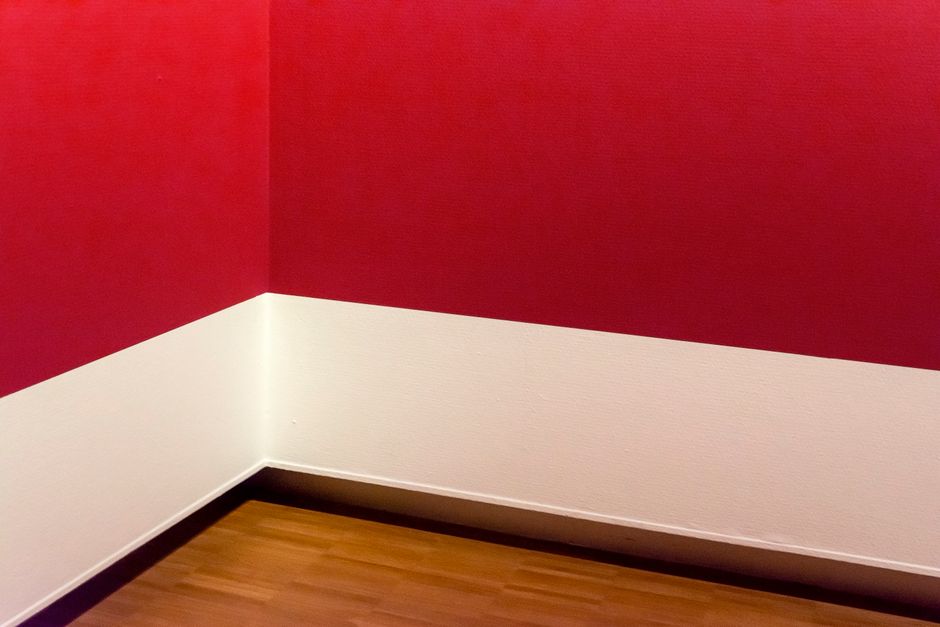
Understanding Spatial Psychology: Will Busy Wallpaper Overwhelm a Small Room?
To decode whether an accent wall will overwhelm a tight space, you first need to understand human visual perception. When we walk into a room, our eyes instinctively scan the vertical planes for boundary markers. In a spacious loft, the eye travels a long distance before hitting a corner. In a small room, however, the eye bounces rapidly between opposing walls.
When you apply a high-contrast, oversized pattern to a feature wall, you create a powerful optical anchor. If that anchor is disproportionate to the room's total volume, it triggers a sensation of visual clutter. This is why many people fear that will busy wallpaper overwhelm a small bedroom wall. The fear is entirely justified when patterns lack negative space. However, when you balance wall scale with intelligent accent wall measure techniques, the wallpaper acts as a spatial trick, pushing the wall outward and adding depth rather than closing in.
The Myth of "Dark and Bold is Forbidden"
A common misconception is that small rooms demand pale, neutral, minimalist paint or minuscule patterns. In reality, tiny prints repeated infinitely across a wall can create a vibrating optical effect that actually hurts the eyes in tight quarters. Conversely, a moody, rich, mid-to-large-scale mural or graphic pattern can blur the boundaries of a small room, making the corners recede into shadow. The key lies not in avoiding bold designs, but in understanding how to choose wallpaper scale for narrow accent walls and matching them with your overall interior layout.
Step 1: Mastering Wall Scale and Proportions
Before purchasing a single roll of designer paper, you must evaluate the proportional relationship between your wall dimensions and the graphic weight of the pattern. Proportions dictate whether your room feels curated or chaotic.
Evaluating Room Proportions Before Installing Wallpaper
Start by taking a tape measure and recording the exact height and width of your target wall. Next, look at the architectural elements of the space:
- Ceiling Height: Low ceilings (under 8 feet) require vertical emphasis. Look for vertical stripes, upward-sweeping vines, or trailing florals that draw the eye toward the ceiling, creating an illusion of height.
- Wall Width: Extremely narrow walls can swallow large motifs, cutting off a stunning graphic in awkward ways. Ensure at least one full repeat of the pattern can fit comfortably across the primary sightline of the wall without being chopped in half by a doorway or corner.
- Fixed Openings: Account for windows, doors, electrical outlets, and built-in shelving. If a wall is broken up by multiple doors, an intricate large-scale pattern will look disjointed and fragmented.
When measuring room proportions before installing wallpaper, always map out your primary furniture layout. If a massive king-sized headboard is going to cover 70% of your accent wall, selecting an intricate pattern featuring delicate center medallions is a waste of time and money. Instead, choose an all-over macro pattern or a subtle textural weave that peeks out harmoniously around your furniture.

Step 2: Decoding Pattern Repeats and Matching Types
One of the most expensive mistakes DIYers make is ignoring the math of pattern matching. When calculating materials, you cannot simply measure the square footage of your wall and divide it by the square footage of a roll. You must factor in the pattern repeat size.
What is a Pattern Repeat?
The pattern repeat is the vertical distance between identical points on a design. If a floral blossom appears at the top of the design and then appears again 18 inches down, your pattern repeat is 18 inches. When hanging wallpaper, adjacent strips must be aligned vertically so the pattern flows seamlessly. This means you will inevitably trim top and bottom excess from every single strip to achieve proper alignment.
Understanding Match Types
- Straight Match: The pattern matches horizontally across adjacent strips at the exact same height. This is the easiest to calculate and wastes a moderate amount of paper.
- Drop Match (Half-Drop Match): The pattern on the second strip drops down by half the pattern repeat length before matching the first strip. This creates a diagonal flow. While visually stunning in small spaces, it generates the highest amount of waste and requires extra rolls.
- Random Match: No matter how you align the strips, the pattern matches. Common in textures, grasscloths, and simple stripes. This requires virtually zero pattern matching calculation.
When measuring drop match and pattern repeat for small spaces, always add the full pattern repeat length to each cut strip height. For example, if your wall height is 8 feet (96 inches) and your pattern repeat is 20 inches with a half-drop match, every single strip cut must account for potential trimming losses, rounding your cutting length up to the nearest multiple of the repeat.
Step 3: Calculating Wall Square Footage and Material Needs
Accurate math prevents the nightmare of running out of wallpaper mid-project—especially when dealing with dye lots where ordering an extra roll weeks later might result in a noticeable color mismatch.
How to Measure Walls for Accent Wallpaper in Small Rooms
Follow this step-by-step formula for calculating wall square footage for small room wallpaper:
- Measure the Width: Measure the total width of the accent wall in inches or feet.
- Measure the Height: Measure from the top of the baseboard to the bottom of the crown molding or ceiling line.
- Calculate Square Footage: Multiply Width × Height. For example, a wall that is 10 feet wide and 9 feet tall equals 90 square feet.
- Account for Waste: Add 15% to 20% extra to your total square footage to cover trimming, pattern matching waste, and unexpected errors. For a 90 sq ft wall, add 18 sq ft, bringing your target coverage to 108 sq ft.
- Check Roll Coverage: Check the manufacturer label to see how many square feet a single roll covers (standard US rolls typically cover about 28 to 56 square feet depending on width and length). Divide your target coverage by the roll yield to find your exact roll count.
Step 4: Maintaining Visual Clearance and Spatial Balance
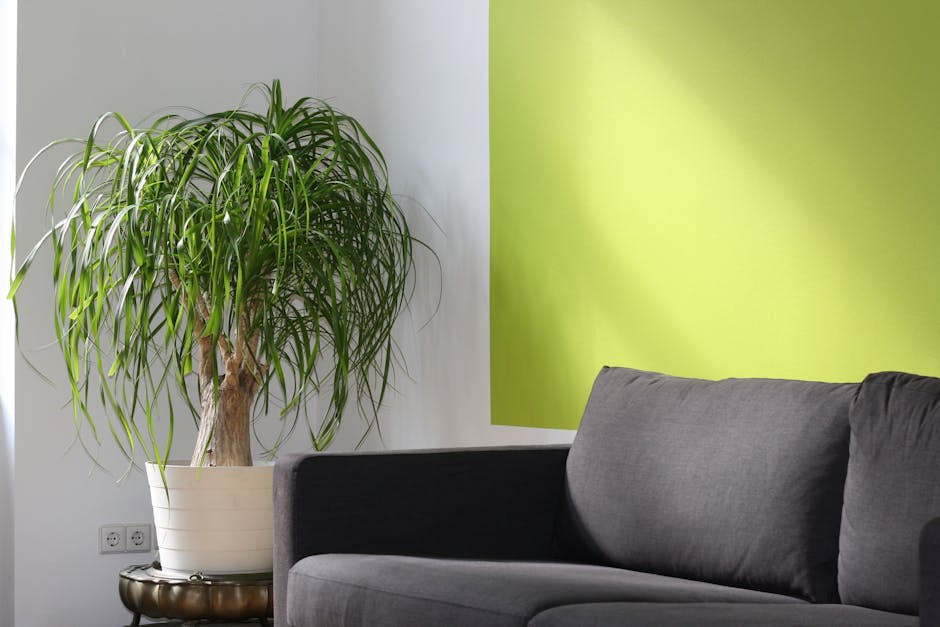
Visual clearance refers to the breathing room between your heavily patterned accent wall and the other physical objects in the room—including artwork, lighting fixtures, furniture, and adjacent plain walls.
Visual Clearance Rules for Patterned Wallpaper in Tight Spaces
When you introduce a high-energy pattern into a compact room, you must obey strict layout boundaries to prevent sensory overload:
- The Rule of One Accent: In a small bedroom or office, stick to one accent wall. Wallpapering all four walls in a small room with a bold pattern will shrink the perceived volume dramatically. Reserve the wallpaper for the natural focal wall—typically the wall behind the bed, the wall facing the entryway, or the back of a shallow nook.
- Balancing Wall Art: Wondering how to balance wall art and wallpaper in tight rooms? The golden rule is simple: less is more. If your wallpaper features a busy, intricate damask or botanical print, avoid hanging heavy gallery walls over it. The pattern *is* the art. If you must hang a frame, choose a large piece with a thick, solid mat board and a simple frame to create a visual resting place for the eye.
- Lighting and Color Reflection: Evaluate natural light thoroughly. Dark, matte wallpapers absorb light, making tiny rooms feel cozy and intimate—or dark and cave-like. Reviewing evaluating natural light and wall color for small room wallpaper ensures you pair your wallpaper with adequate artificial lighting, wall sconces, and mirrors to bounce light back into the space.
Step-by-Step Guide: Measuring and Preparing a Small Feature Wall
To put these principles into immediate practice, follow this step-by-step framework before placing your wallpaper order or picking up a smoothing brush.
- Audit the Wall Surface: Clean the wall thoroughly, fill any nail holes, and sand smooth. Textured walls must be skim-coated or fitted with a heavy-duty lining paper, as patterns will warp over bumps.
- Determine Your Starting Point: For symmetric balance, find the exact horizontal center of the wall and hang your first strip there, working outward to the corners. For asymmetrical or mural styles, start from the primary corner or window frame.
- Perform a Dry Run: Unroll two strips against the wall without adhesive to inspect how the pattern reads from your room's natural sitting or standing height.
- Calculate Exact Drop Lengths: Use a tape measure and a level to snap vertical plumb lines. Mark your cuts clearly on the back of the paper with a soft pencil, factoring in your pattern repeat and top/bottom trimming allowances of 2 to 3 inches.
- Execute Installation: Apply paste (or peel backing) smoothly, working from the center outward to eliminate air bubbles using a plastic smoothing tool.

Common Mistakes to Avoid When Wallpapering Small Rooms
Even seasoned DIY enthusiasts occasionally fall into common traps when working with accent walls in compact footprints. Keep these pitfalls in mind:
- Ignoring Dye Lots: Ordering rolls from different production batches can result in subtle background color shifts that become glaringly obvious under interior lighting. Always check batch numbers on roll labels.
- Failing to Account for Skirting Boards and Coving: Never measure strictly from floor to ceiling without adding extra clearance for trimming. Walls are rarely perfectly square, and floors frequently slope.
- Choosing Oversized Motifs for Narrow Nooks: If a pattern's repeat is 24 inches wide and your accent wall is only 36 inches wide, you will only see one and a half repeats. This looks disjointed. Match your scale down for narrow spans.
- Over-Accessorizing the Room: Cluttering the floor space with bulky furniture against a vibrant accent wall creates visual noise. Keep surrounding decor streamlined, minimalist, and cohesive.
Frequently Asked Questions
1. Will bold wallpaper make my small bedroom look cramped?
Not necessarily. While extremely high-contrast, chaotic micro-patterns can induce visual fatigue, a carefully chosen mid-to-large scale accent wall behind a bed often creates an optical illusion of depth, pushing the wall visually backward and making the room feel more expansive.
2. How do I calculate how much wallpaper I need for a small feature wall?
Measure the total width and height of the wall to get your base square footage. Add 15% to 20% extra to compensate for trimming and pattern matching waste. Finally, divide your adjusted square footage by the coverage area listed on your chosen wallpaper roll spec sheet.
3. Should I use peel-and-stick or traditional pasted wallpaper in a tight room?
Both work wonderfully in small rooms. Peel-and-stick is exceptionally forgiving for renters and beginners tackling DIY accent walls, while traditional paste-and-paper offers superior slip for precise pattern matching during installation.
4. How do I prevent large pattern repeats from looking cut off on a narrow wall?
Center your pattern calculation. Instead of starting your first strip on the far left corner, find the exact horizontal center of the wall and center your primary motif there. This ensures balanced margins on both outer edges.
5. Can I hang wall art over a patterned accent wall?
Yes, but exercise caution. Choose art with thick, neutral matting and simple frames, or opt for minimalist line drawings. Avoid complex, colorful canvases that will clash with the underlying wallpaper design.
6. What is the best wall to choose for a small room accent feature?
Select the wall your eyes naturally hit first upon entering the room. In bedrooms, this is almost always the headboard wall. In home offices, it is typically the wall directly behind your desk or facing your primary seating position.
Related FitMySpace Tools
Planning your room renovation involves more than just walls. Explore our suite of calculators to optimize your interior layout and material budgeting:
Conclusion
Transforming a compact space with an accent wall is an exciting design journey that rewards precision and forethought. By carefully evaluating wall scale, mastering pattern repeat calculations, and maintaining strict visual clearance, you can banish the fear of overpowering your room. Remember that design success in small spaces is all about intentional balance—allowing your chosen wallpaper to shine as the artistic hero while letting the rest of the room breathe. Armed with accurate measurements and smart calculation strategies, you are fully prepared to elevate your interior space with confidence.
💬 Comments & Questions
Post a Comment