
What Bed Size Fits My Bedroom? Measure Walking Space Before You Buy
Meta description: Learn how to choose a bed size that truly fits your bedroom by measuring the frame, walking space, wardrobe doors, storage drawers and everyday circulation.
A mattress size does not tell you how much bedroom space a bed will use. Frames extend beyond mattresses, headboards add thickness, storage drawers need opening room, and wardrobes can turn a comfortable-looking layout into a daily squeeze. FitMySpace planning starts with the full bed frame dimensions and then protects the movement zones that matter most.
Measure the Bed You Will Actually Buy
Record overall frame width, length and height. If the product has a headboard, include its thickness and any backward lean. For an upholstered bed, side rails may extend several centimeters beyond the mattress. For a storage bed, note the full drawer extension or the lifting arc of an ottoman mechanism.
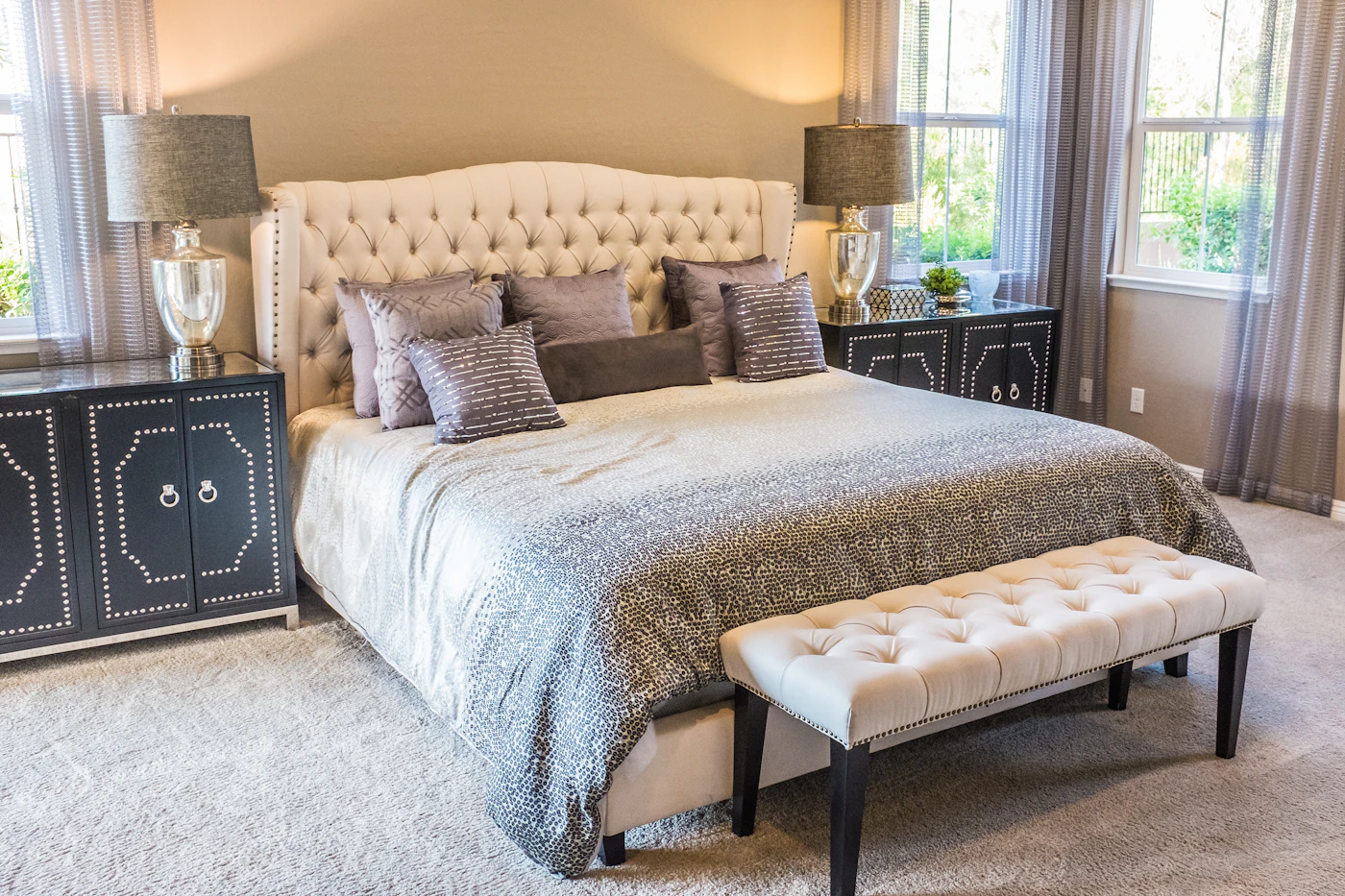
Draw the Bedroom Around Fixed Features
Measure every wall from corner to corner, then mark the door position and swing, windows, radiators, built-in wardrobes, outlets and any sloped ceiling. Also record sill height if the bed might sit under a window. A low headboard may fit where a tall one blocks the window or interferes with curtains.
Prioritize the Most Important Walkway
Not every side of the bed needs identical clearance. A bed used by two people usually benefits from access on both sides, while a single bed can often sit against one wall. The route from bedroom door to wardrobe is typically more important than an unused corner beside a nightstand. Map real habits instead of forcing perfect symmetry.
Bed-Size Test With Painter’s Tape
- Mark the complete frame outline, not the mattress.
- Add the headboard thickness.
- Mark bedside tables as separate rectangles.
- Open the bedroom door fully.
- Open wardrobe doors and drawers.
- Simulate storage drawers under the bed if present.
- Walk the room carrying a laundry basket.
If the route only works when you turn sideways, the layout may be technically possible but uncomfortable. A slightly smaller bed can produce a much more usable bedroom.

King, Queen, Double or Single?
Names vary by country, so do not plan from labels alone. Always use the product’s actual centimeter or inch dimensions. Two retailers can use similar names for slightly different frames, and a bulky upholstered design can be much larger than a simple platform bed around the same mattress.
For each candidate, create a mini comparison: frame size, remaining side clearance, space at the foot, wardrobe opening clearance and delivery access. The best bed is the largest one that still supports comfortable use of the room—not necessarily the largest rectangle that fits between the walls.
The Wardrobe Conflict
Hinged wardrobe doors need a swing zone. Drawers need a straight pull-out zone plus standing space for the person using them. Sliding wardrobes reduce door-swing conflict but still need clear standing space in front. If the bed sits opposite a wardrobe, measure the gap from the bed’s outer frame to the wardrobe front, then subtract the open drawer or door projection when relevant.
Space at the Foot of the Bed
The foot zone often carries the main circulation route. Benches, TV units and laundry baskets can quickly consume it. If the bedroom door opens toward the bed, make sure the door edge and handle do not hit the frame. If you want a bench, tape its full depth and walk around it before buying.

Storage Beds Need a Second Footprint
A lift-up storage bed mainly needs vertical and access clearance at the lifting side. A drawer bed needs horizontal extension room. Measure drawers when fully open and add standing room beyond them. If a drawer opens toward a wall, radiator or wardrobe, the storage feature may become unusable even though the bed itself fits.
Worked Layout Example
Consider a room 3.2 m wide by 3.6 m long. A large upholstered bed might have an outer frame 2.0 m wide and 2.2 m long. Centered across the 3.2 m wall, it leaves about 60 cm per side before nightstands. Add two 40 cm nightstands and the arrangement becomes crowded. A narrower frame or one nightstand may preserve a better route. The room area did not change; the accessory footprint did.
Delivery Access Still Matters
Many beds arrive flat-packed, making delivery easier than a sofa, but check the longest headboard panel, bed base or preassembled component. Measure stairs, elevator and bedroom door. A tall one-piece headboard can be the limiting item. Also confirm whether there is enough ceiling height to rotate it upright in the room.
FAQ
Should I center the bed on the wall?
Only if it supports circulation and storage. An off-center bed can be more functional in a small room, especially when one side needs a wider route to a wardrobe.
Can a king bed fit in a small bedroom?
Possibly, but “fit” should include walking and storage access. Tape the exact frame dimensions and test all doors before deciding.
How much room do I need for under-bed drawers?
Use the manufacturer’s full drawer extension plus enough room to stand and lift items. Measure the drawer path separately on each side.
Does headboard thickness matter?
Yes. A thick or leaning headboard pushes the mattress and foot of the bed farther into the room, reducing the remaining foot clearance.
💬 Comments & Questions
Post a Comment